
The 2 types of letters — formal letter vs informal letter — have served as essential forms of communication for centuries.
Table of Contents
Introduction
In a world driven by communication, writing the right kind of letter matters. Whether you are applying for a job or writing to a friend abroad, or writing in an examination setting, the way you craft your message should suit your purpose and your audience.
The roots of letter trace back to the ancient civilisation of Mesopotamia, specifically the Sumerians (modern-day Iraq). These early letters were typically business or administrative. They were written in cuneiform script on clay tablets, long before modern means of communication existed.
Here, you shall learn the differences between the 2 types of letters, formal and informal, which will enable you to choose the right format with confidence and purpose.
Why the Type of Letter Matters
Letters are not simply a combination of words written on a page. They are tools of communication and for expressing your concerns and emotions. The type of letter is shaped by the context and relationship between the writer and the reader.
For instance:
- When writing a complaint to a company, you should use a formal tone.
- Sharing holiday memories with a cousin calls for an informal approach.
A well-written letter has the following generic attributes:
- Shows respect for the reader
- Serves its purpose effectively
- Ensures your message is received in the right spirit
Understanding this difference helps you avoid misunderstandings and ensures your message sounds just right.
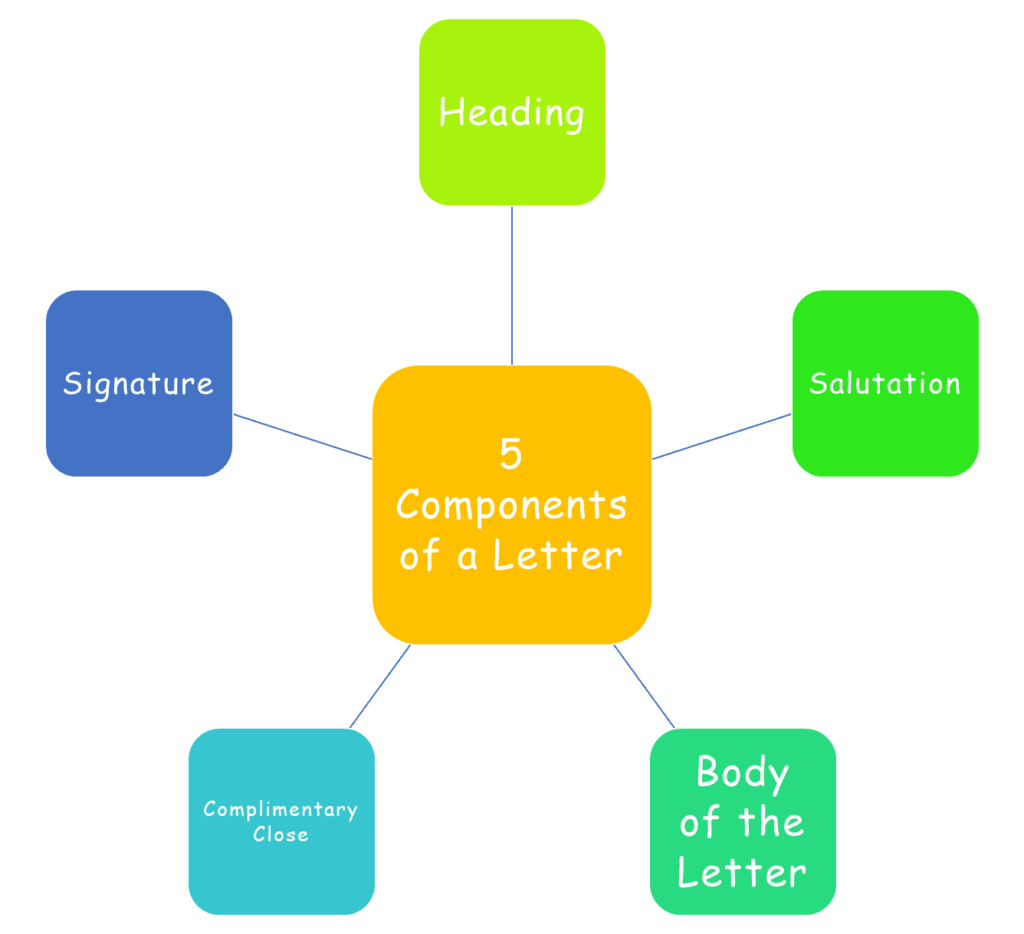
5 Components of a Letter
A letter usually comprises 5 main components, enumerated below:
i. Heading
It appears at the top of the letter and includes the following:
- Sender’s address (optional in informal letters)
- The date on which the letter is written
ii. Salutation
It is greetings, appearing at the beginning of the letter by addressing the recipient. For instance:
- Dear Sir/Madam, (formal)
- Dear Mom, Hi Sarah, (informal)
- My dear sister, (Informal)
iii. Body of the Letter
The main content of the letter is referred to as the body. It normally contains the following paragraphs:
- Introduction: State the purpose or begin with greetings.
- Main Content: Share information, requests, stories, or updates.
- Conclusion: End respectfully and clearly, often with a call to action or well wishes.
iv. Complimentary Close
A polite way to end the letter before signing your name. For instance:
- Yours affectionately, Yours sincerely, Yours faithfully (formal)
- With love, Best wishes (informal)
v. Signature
Your name at the end of the letter is referred to as a signature. In formal letters, include your full name and title if needed. In informal letters, your first name is sufficient.
Exam Style Letter
2 Types of Letters
1. Formal Letters
As stated earlier, these letters are used to communicate with clarity and respect.
Purpose and Use
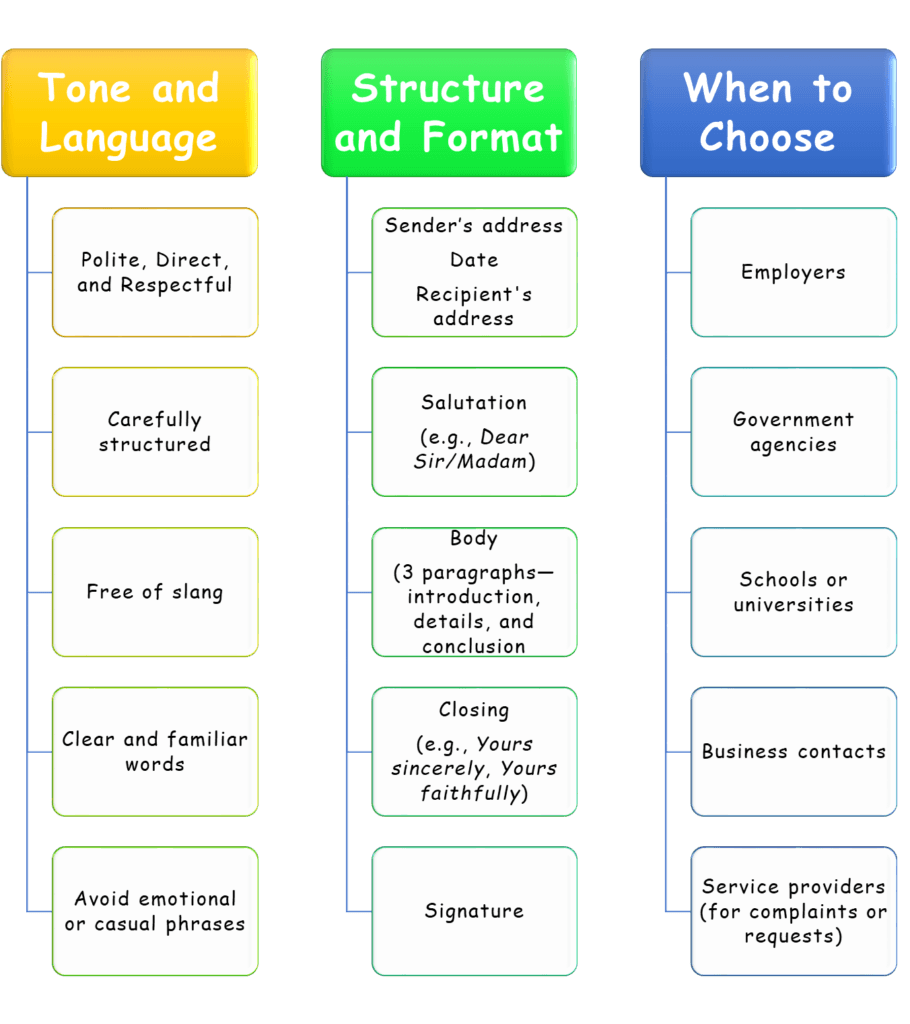
These letters are written for official and professional purposes. The format is most suited when you need to be taken seriously or speak on behalf of a concern.
Some of its main features are enumerated here.
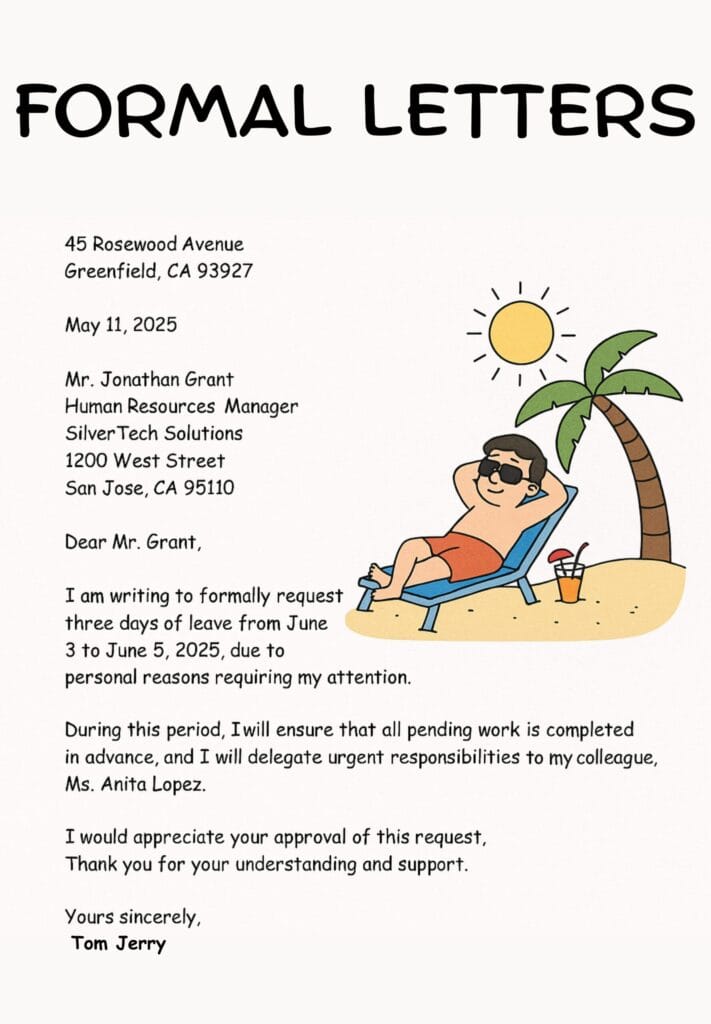
A sample a letter, with all its components, is shown below:
2. Informal Letters
These letters are used for personal acquaintances and friendly relationships.
Purpose and Use
These letters are for personal communication. These letters are used to share experiences, offer invitations, or simply stay in touch.
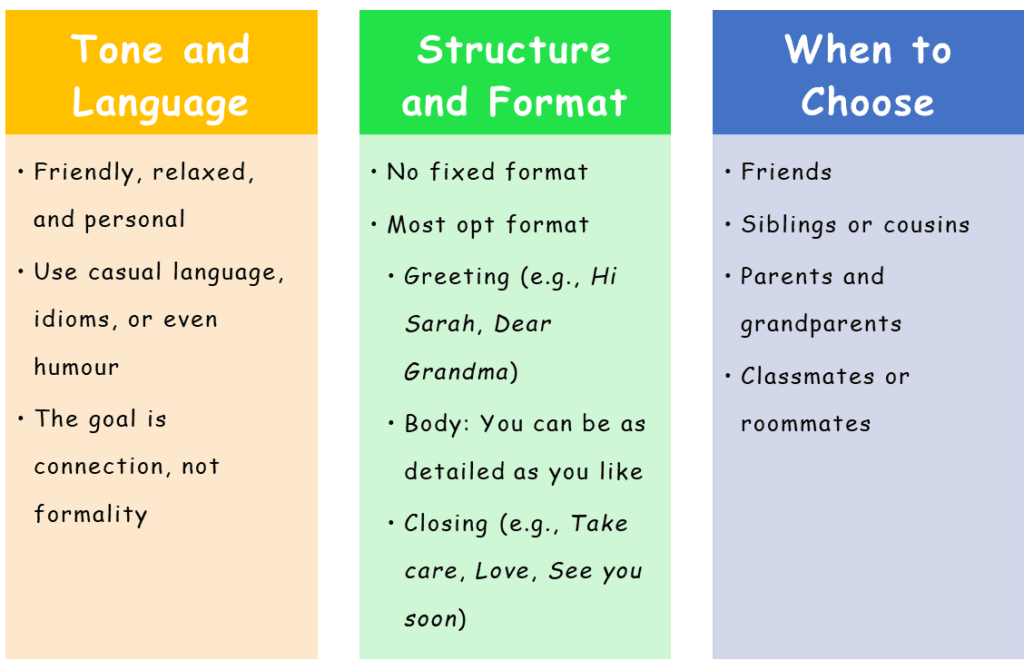
Its main features are enumerated here.
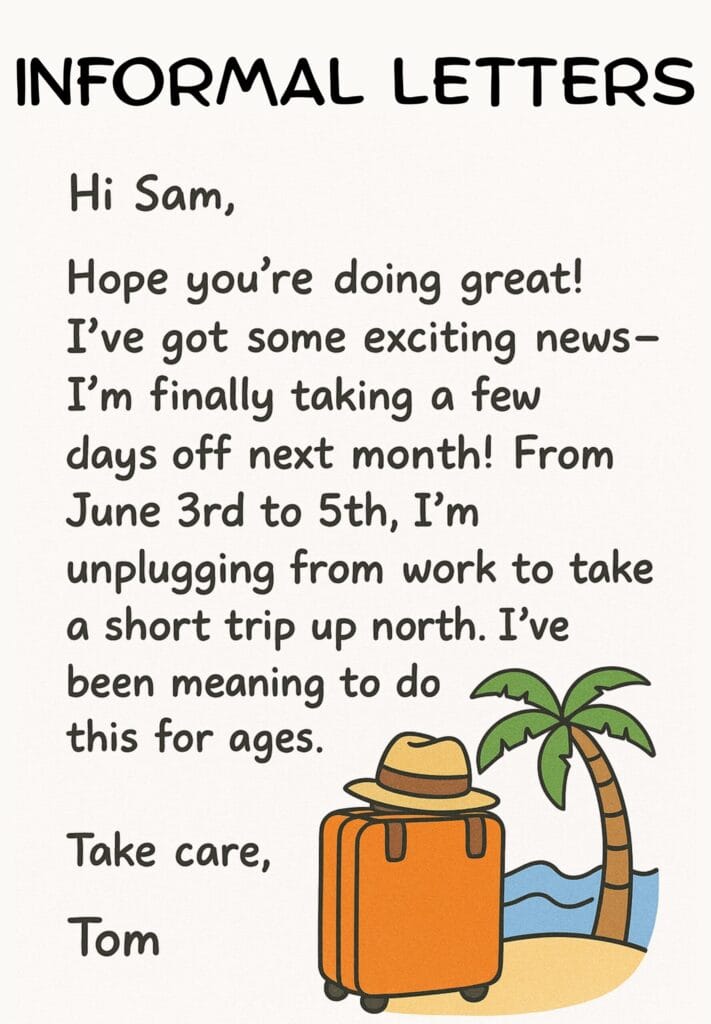
Here you can see a sample of a letter.
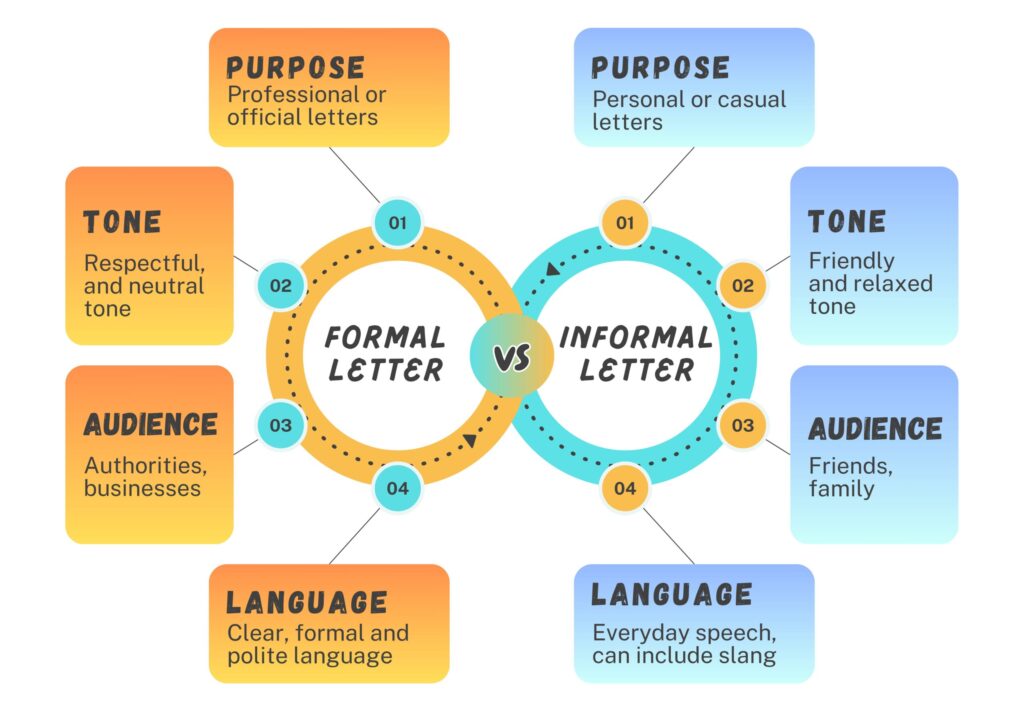
Key Differences between Formal Letters vs Informal Letters
Choosing the Right Letter Style | A Simple Rule
Always ask: Who am I writing to, and why?
- If the person holds an official role or if your purpose is serious, go formal.
- If you are chatting with someone close, feel free to relax your tone (informal).
Clear writing builds understanding, and understanding builds trust.
Conclusion
In writing, the form of a letter follows its function. Whether you choose a formal or informal, depends entirely on your purpose and audience. Neither is superior; they simply serve different needs. The key is to use clear language, focused sentences, and an appropriate tone.
The next time you sit down to write, keep these principles in mind. Choose your format purposefully, write with clarity, and communicate with care.
Frequently Asked Questions (FAQs)
What is the main difference between 2 types of letters, formal letter vs informal letter?
A formally written letter is used for official purposes or professional communication, using a polite and structured tone, while an informal one is personal and friendly, often written to friends or family.
When should I use a formal format?
Use it when writing to a company, government office, teacher, employer, or any situation that requires professionalism and clarity.
Can I use contractions or slang in a formally written letter?
No, contractions (like don’t, can’t) and slang should be avoided in these letters. The language must remain respectful and professional.
Is the sender’s address necessary in letters written informally?
The sender’s address is optional in informally written letters because it is known to the receiver in most of the part, however, formally written letters always require it for clarity and follow-up purposes.
How long should a letter be?
There is no fixed length.
However, a good letter—formal or informal—should be clear and to the point. The writer must avoid unnecessary details in formal letters.