
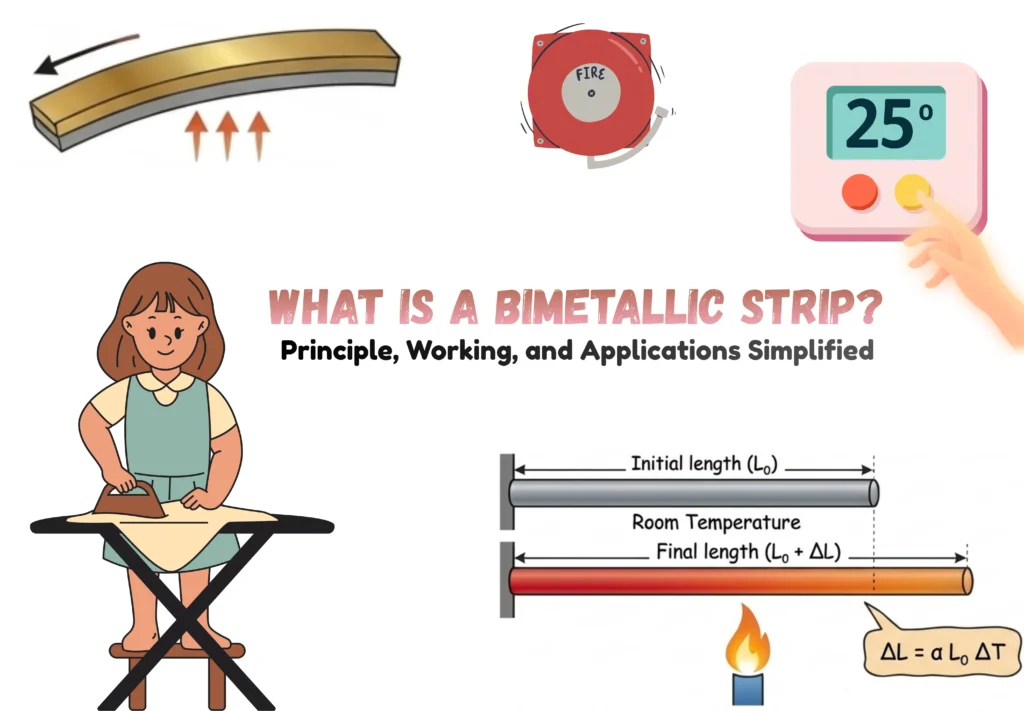
Do you know, “what is a bimetallic strip?” Learn about this marvellous discovery of human history.
Table of Contents
Introduction
Have you ever noticed that some machines at your home automatically turn on or off when the temperature changes? Many of these actions happen because of a simple device called a bimetallic strip.
A bimetallic strip is a small yet very useful device. It is usually made by joining two different metals together. The main function of this strip is to sense temperature and control electrical devices automatically.
Here, we shall address a few fundamentals of bimetallic strips, such as:
What is a Bimetallic Strip?
The word bi means two, and metallic means metal. So, bimetallic meaning is “made of two metals.”
To understand it simply, a bimetallic strip is a strip made of two metals stuck together. The main purpose of having two different metals is:
- They expand differently when heated
- One expands more than the other
This difference in strip bending due to a temperature change is what we make use of in our daily lives.
The Main Principle behind Bimetallic Strip
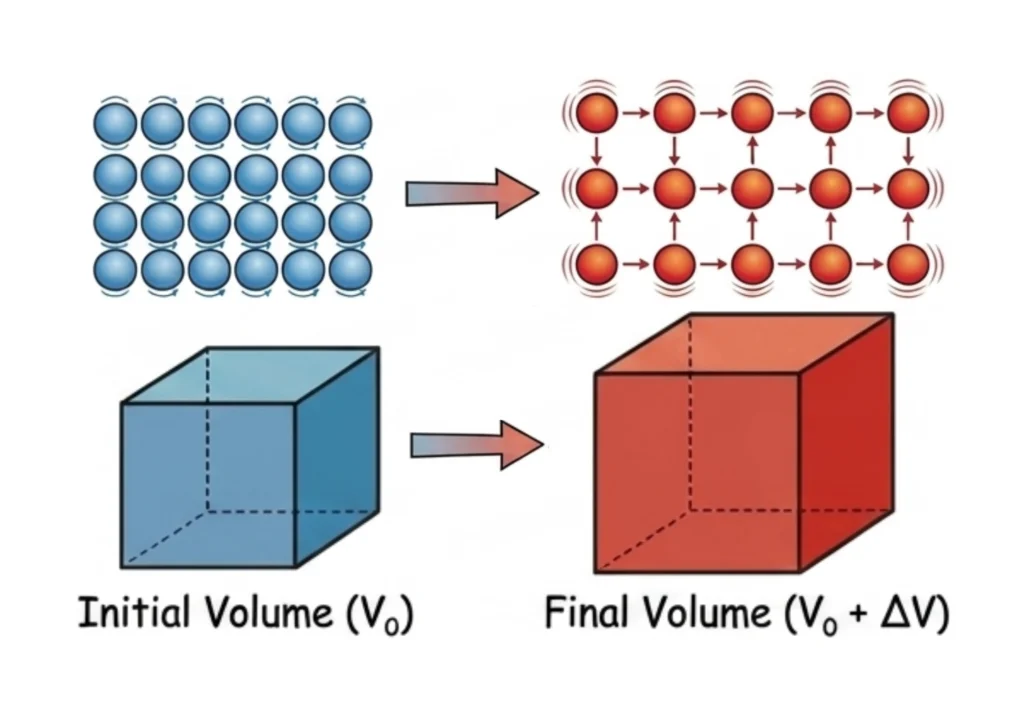
The key idea behind the principle of the bimetallic strip is the thermal expansion in solids.
| When Solids Are Heated | When Solids Are Cooled |
| Particles start moving faster | Particles lose energy |
| Take up more space | Vibration decreases |
| The strip expands | The material contracts |
One thing is important to note here: not all metals expand equally:
- Some metals expand a lot
- Some expand very little
The reason is that different metals have different coefficients of expansion. For instance;
- Iron

- Brass


So, the principle of the bimetallic strip is based on unequal expansion of two different metals when heated. When two metals are joined together:
- One metal tries to expand more
- The other resists because it expands less
Since both metals are fixed together and cannot be separated, the strip bends. This bending is what we make use of in many temperature control devices.
Working of Bimetallic Strip
Let us understand in a step-by-step manner how a bimetallic strip works.
Step 1: Joining two metals
Two different metals (like iron and brass) are joined together to form a strip.
Step 2: Normal condition
At normal temperature, both metals are straight and equal in length.
Step 3: Heating starts
When heat is applied, both metals start expanding.
Step 4: Unequal expansion
One metal expands more than the other.
Step 5: Bending happens
Since they are stuck together, the strip cannot expand freely. So it bends toward the side of the metal that expands less.
Step 6: Cooling
When the temperature goes down, the strip returns to its original straight shape.
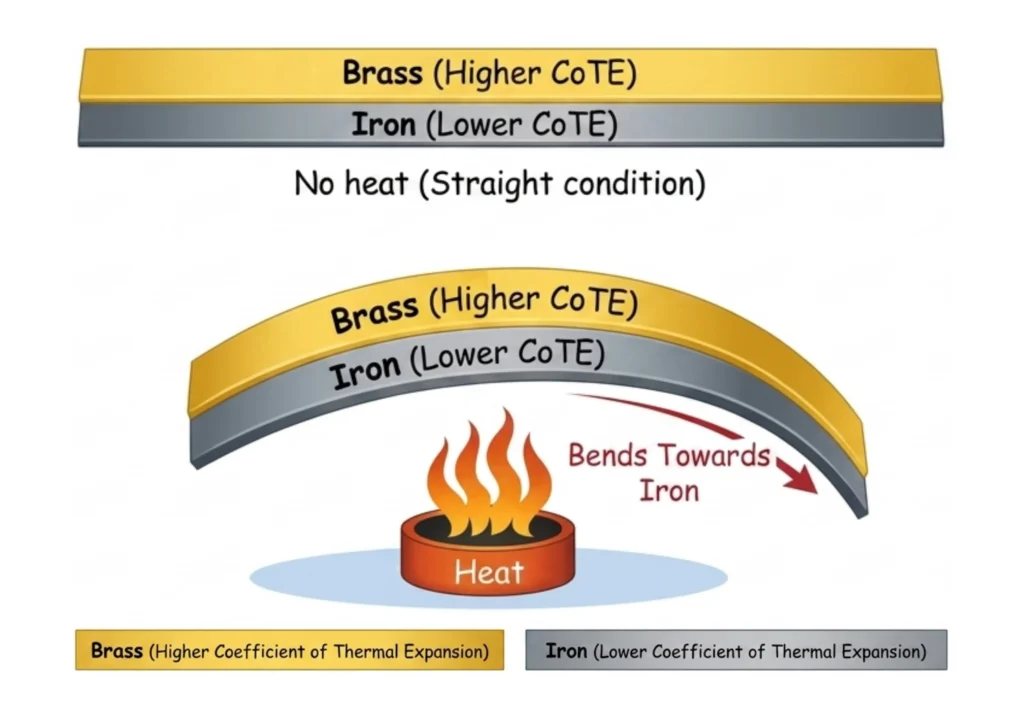
This simple bending and straightening is the working of a bimetallic strip.
Why Does a Bimetallic Strip Bend on Heating?
Now, let us address the core question about why a bimetallic strip bends.
- The metal with a higher coefficient of thermal expansion (brass) expands more.
- The other metal with a lower coefficient of thermal expansion (iron) expands less.
- The difference in thermal expansion creates internal stress that causes the strip to bend.
- The strip bends towards the metal with the lower coefficient of expansion (iron pulls inward).
Hence, the strip curves do not stay straight.
Advantages and Disadvantages of Bimetallic Strips
| Advantages of Bimetallic Strip | Disadvantages of Bimetallic Strip |
|---|---|
| Simple in design | Not a very accurate tool |
| Cheap to manufacture | May wear out over time |
| Does not need electricity | Inferior to electronic sensors |
In summary, a bimetallic strip is a smart, simple, cheap, and automatic temperature-sensitive tool that bends when heated and straightens when cooled. This simple action is used to control many machines.
Applications of Bimetallic Strip in Daily Life
You might not notice it, but the applications of bimetallic strips in daily life are everywhere around us. These strips are mainly used where automation is needed.
Some easy bimetallic strip examples are:
- Electric iron thermostat
- Fire alarms in buildings
- Refrigerator temperature control
- Industrial machines with overheating protection
1. Bimetallic Strip in Thermostat
One of the most important uses of a bimetallic strip is in a thermostat.
Thermostat Working Principle
A thermostat is a device that controls temperature automatically. Here is how it works:
- When the temperature rises, the bimetallic strip bends
- It breaks the electrical circuit
- The heater or device turns off
- When the temperature falls, the strip straightens
- The circuit is completed again
- The device turns back on
This automatic switching is called the thermostat working principle. It is widely used in:
- Refrigerators
- Room heaters
- Air conditioners
2. Bimetallic Strip in Electric Iron
An electric iron also uses a bimetallic strip.
| When The Iron Becomes Hot | When The Iron Gets Cools |
| The strip bends | The strip straightens |
| Electricity cuts off | Electricity starts again |
| The iron stops heating | The iron restarts heating |
This way, the temperature stays under control and clothes can be prevented from burning.
3. Bimetallic Thermometer
A bimetallic thermometer is used to measure temperature.
It has a coiled bimetal strip inside. When temperature changes:
- The coil expands or contracts
- Expansion or contraction of the coil moves a needle
- The needle points to the temperature shown on a dial
Advantages and Disadvantages of Bimetallic Thermometer
| Bimetallic Thermometer Advantages | Bimetallic Thermometer Disadvantages |
| Does not need electricity | Less accurate than digital thermometers |
| Strong, durable, and easy to use | Slow response to temperature changes |
4. Bimetallic Fire Alarm and Fire Detector
Another important application of a bimetallic strip is in safety systems. For instance;
- Bimetallic Fire Alarm
- Bimetallic Fire Detector
| Fire Alarm | Fire Detector |
| Heat from the fire bends the strip | It senses high temperature |
| It completes an electric circuit | Activates warning systems |
| The alarm starts ringing | Helps prevent fire accidents |
Other Applications of Bimetallic Strip
There are many other applications of bimetallic strips, including many household and industrial devices. For instance;
- Toasters
- Electric kettles
- Automatic switches
- Overheating protection in machines
All these devices rely on temperature changes to work safely.
Conclusion
The bimetallic strip is a simple but very important invention in physics and engineering. It works on the basic idea of thermal expansion in solids, where different metals expand at different rates.
Because of this simple principle, it is used in many daily life devices like thermostats, electric irons, fire alarms, and thermometers.
Even though modern systems use digital sensors, the working of the bimetallic strip is still widely used because it is cheap, reliable, and easy to maintain.
Frequently Asked Questions (FAQs)
What is a bimetallic strip?
A bimetallic strip is a device made by joining two different metals that expand at different rates when heated. This difference causes the strip to bend, which is used to control temperature in devices.
What is the principle of the bimetallic strip?
The principle of the bimetallic strip is based on thermal expansion in solids, where two metals expand unequally when heated, causing the strip to bend.
How does a bimetallic strip work step by step?
The working of a bimetallic strip involves:
- Two metals are joined together
- Heat is applied
- One metal expands more than the other
- The strip bends due to unequal expansion
- It returns to its original shape on cooling
Why does a bimetallic strip bend on heating?
A bimetallic strip bends on heating because one metal expands more than the other, creating internal stress that forces the strip to curve.
What are the applications of a bimetallic strip?
Common applications of bimetallic strip include:
- Fire alarms
- Thermostats
- Electric irons
- Bimetallic thermometers
What is the use of a bimetallic strip in an electric iron and thermostat?
The use of a bimetallic strip in an electric iron and thermostat is to control temperature by automatically switching the electric circuit on and off.
What is the thermostat working principle using a bimetallic strip?
The working principle of a thermostat uses a bimetallic strip that bends with temperature change, breaking or completing an electrical circuit to regulate heat.
What are the advantages and disadvantages of a bimetallic strip?
| Advantages | Disadvantages |
|---|---|
| No electricity required | Less accurate |
| Simple and low cost | Slow response |
| Reliable | Wears out over time |
What is a bimetallic thermometer, and how does it work?
A bimetallic thermometer uses a coiled strip that bends with temperature change. This movement turns a needle on a dial to show temperature.
What are adjustable bimetallic devices?
These devices allow control of temperature settings. For instance;
Bimetal Adjustable Thermostat
This type of thermostat lets users set a temperature level manually.
Adjustable Bimetallic Switch
It is used in machines where different temperature levels are needed for operation.